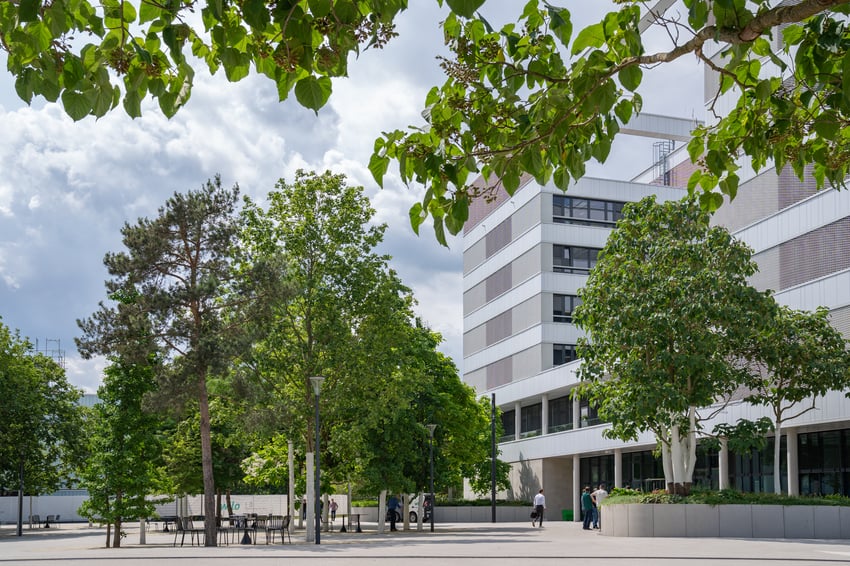
Those who plant exclusively native species today are designing for the past.
Urban growing conditions are demonstrably becoming more extreme: limited root space, heat stress, prolonged drought, intense rainfall events, flooding, and air pollution. In this context, it is no longer viable to select trees primarily based on aesthetics. Future-proof urban trees must first and foremost be able to function under urban stress. Followed by form, colour, or seasonal experience.
Climate adaptation requires a different order of thinking: performance first, appearance second. Only healthy, vital trees can consistently deliver ecosystem services such as cooling, water buffering, CO₂ storage, air purification, and biodiversity value.
Three pillars for climate-resilient tree selection
A future-oriented tree palette rests on three pillars: the right tree in the right place, robustness, and diversity.
1. The right tree in the right place
Every successful planting begins with a thorough site analysis. Soil structure, rootable volume, degree of paving, water management, salt exposure, air quality, wind, and sun exposure together determine what is possible.
A tree may be highly drought-tolerant, but without sufficient rooting space or in conditions of structural waterlogging, it will never function optimally. A future-proof urban tree remains vital under prolonged stress. Only then will it continue to grow and contribute to climate adaptation. Species selection must therefore be derived from the site, not from standard planting lists or nostalgic preferences.
2. Robustness under extreme conditions
Urban trees are exposed to soil and atmospheric drought, heat stress, reflected radiation from buildings and pavement, heavy rainfall events, flooding, de-icing salts, and frost. Drought tolerance and heat resistance are essential, but the ability to function under low humidity and high surface temperatures is equally critical.
Research within the CSI Trees – Future Proof Trees project by Wageningen University & Research shows that leaf scorch can occur despite sufficient soil moisture. Atmospheric drought is therefore an underestimated factor in urban tree management.
3. Diversity as risk management
The future climate is uncertain. A broad range of species and genera reduces risks, increases resilience to diseases and pests, and prevents large-scale failure. A key distinction here is between survival and performance. A tree that remains just vital enough to survive offers limited added value. Fewer trees that function optimally are more valuable than many trees that are structurally under stress. Quality should take precedence over quantity in sustainable urban green management. In many cases, quality is determined by the growing site: the larger the rooting space, the healthier a tree can grow old.
Native versus non-native: from ideology to functionality
The debate around native versus non-native species is often ideological. Native species are ecologically valuable, but climate change calls for pragmatism.
Research by Wageningen University & Research indicates that climate zones shift approximately 160 kilometers per degree of warming (Reference: Marc Ravesloot, Lucas Hulsman, Bert Heusinkveld, Gert-Jan Steeneveld, 2023: Will the Netherlands move up four winter hardiness zones by 2085? Tuin en Landschap, 14/15, pp. 8–11). In scenarios of 3 to 4 degrees of warming, this means a shift of hundreds of kilometers. Woody species naturally migrate only tens to a few hundred meters per year. Waiting for suitable species to arrive “on their own” is therefore not a realistic strategy. Those who take climate adaptation seriously give this migration a helping hand. In heavily paved urban environments, conditions are already more southern than our historical climate.
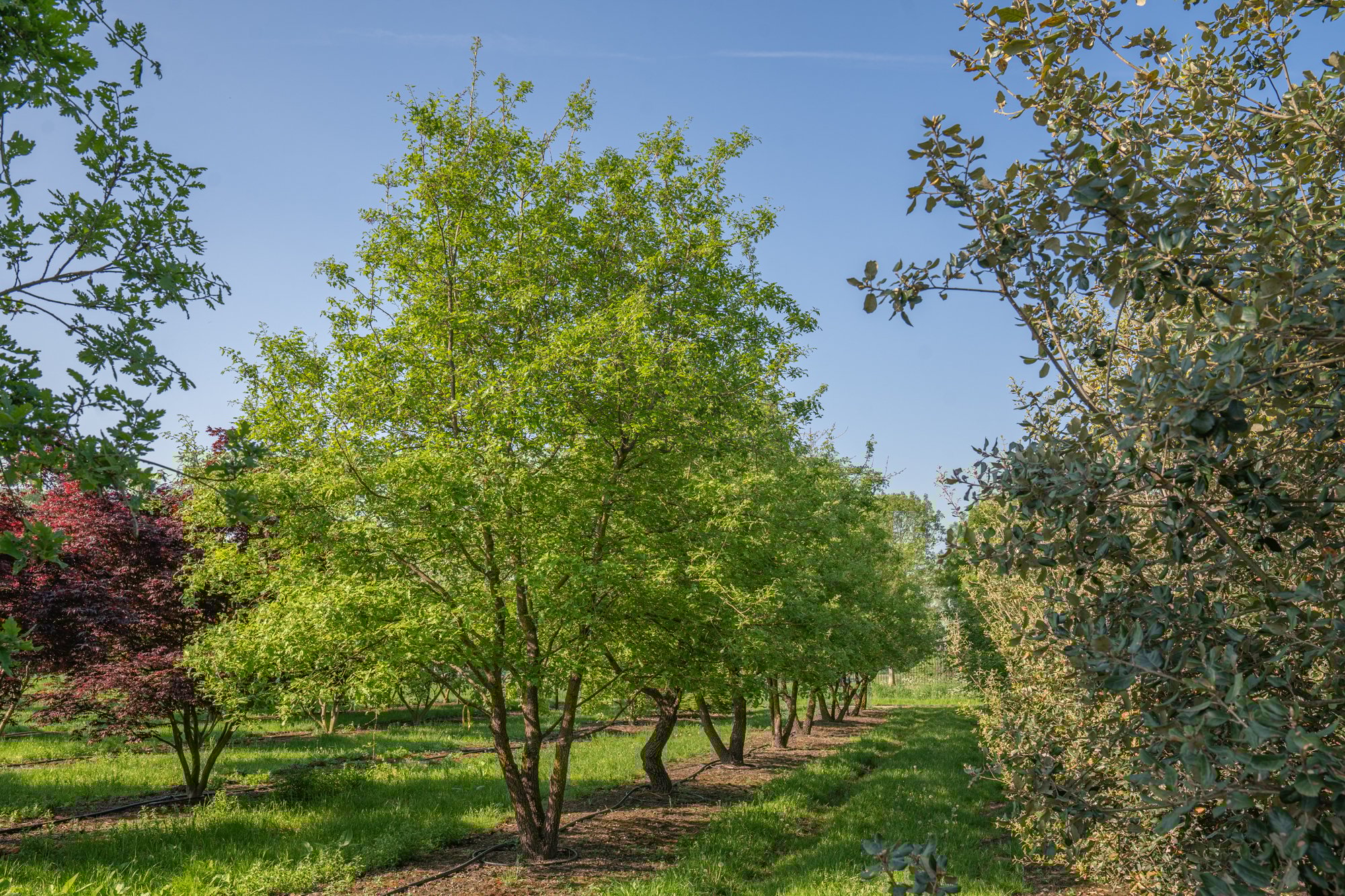
Southern European species: still European, yet more climate-resilient
It is therefore logical to gradually broaden the assortment and plant non-native species alongside native ones. Species from Southern and Central Europe are ecologically closer to our flora but better adapted to warmer and drier summers.
Oaks such as Quercus frainetto and Quercus cerris show strong drought tolerance. Quercus pubescens reduces evaporation through its hairy leaves and is visually hardly distinguishable from Quercus robur. Within maples, Acer monspessulanum is highly tolerant to heat and drought, as are Acer opalus and Acer tataricum.
Strong species from comparable climate zones
Species that retreated from Europe to refugia around the Mediterranean and Caspian regions during the Tertiary period—such as Acer cappadocicum, Parrotia persica, Liquidambar orientalis, Zelkova carpinifolia, and Quercus castaneifolia—evolved under warmer conditions and prove to be remarkably resistant to heat and drought. These are not exotic curiosities, but strategic climate trees. Because of their relative unfamiliarity, not all species are yet widely cultivated.
Many species from Asia and North America have been cultivated in Europe for centuries and have proven themselves in cities and gardens as robust growers. They often originate from regions with warm summers, cold winters, and large temperature fluctuations—conditions increasingly similar to the urban climate of Northwestern Europe. Genera such as Zelkova and Celtis are also known for their tolerance to heat, drought, and paved environments.
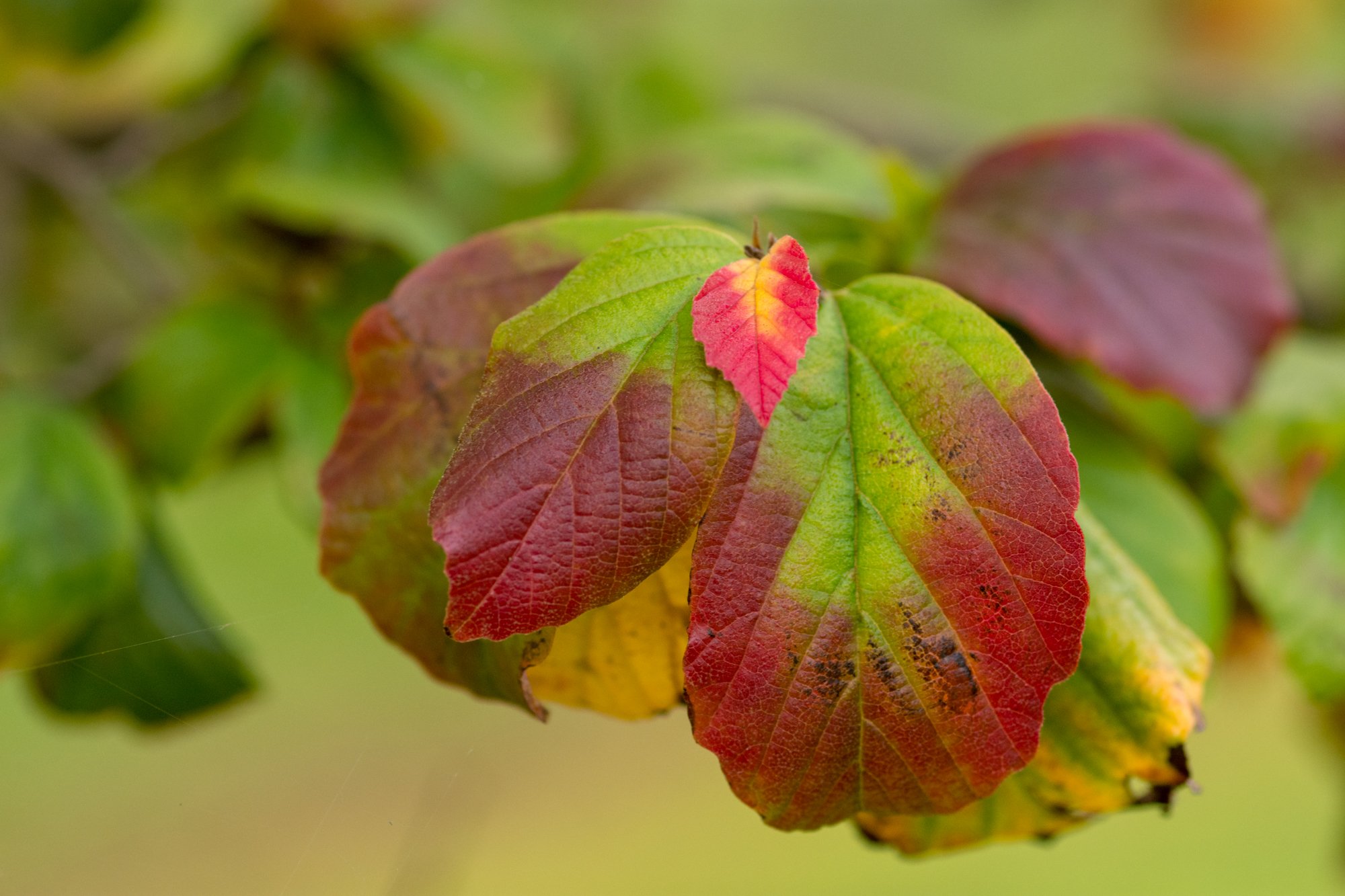
Useful trees from Asia and America
Among oaks, strong examples include Quercus acutissima from East Asia and Quercus imbricaria from North America, both of which remain vital under high temperatures and limited rooting space. Within maples, Acer buergerianum and hybrids such as Acer × freemanii demonstrate vigor and climate tolerance.
Within the Ulmaceae family, crosses between European, Asian, and American elms have produced strong, disease-resistant trees. This genetic broadening makes modern elms particularly suitable for urban applications. Less common but promising is Eucommia ulmoides, notable for its adaptability.
Species such as Gleditsia triacanthos and Gymnocladus dioicus from North America, and Styphnolobium japonicum and Phellodendron amurense from Asia, combine open crown structures with drought and heat tolerance. This makes them especially suitable for paved squares and streets where both light penetration and climate resilience are desired.
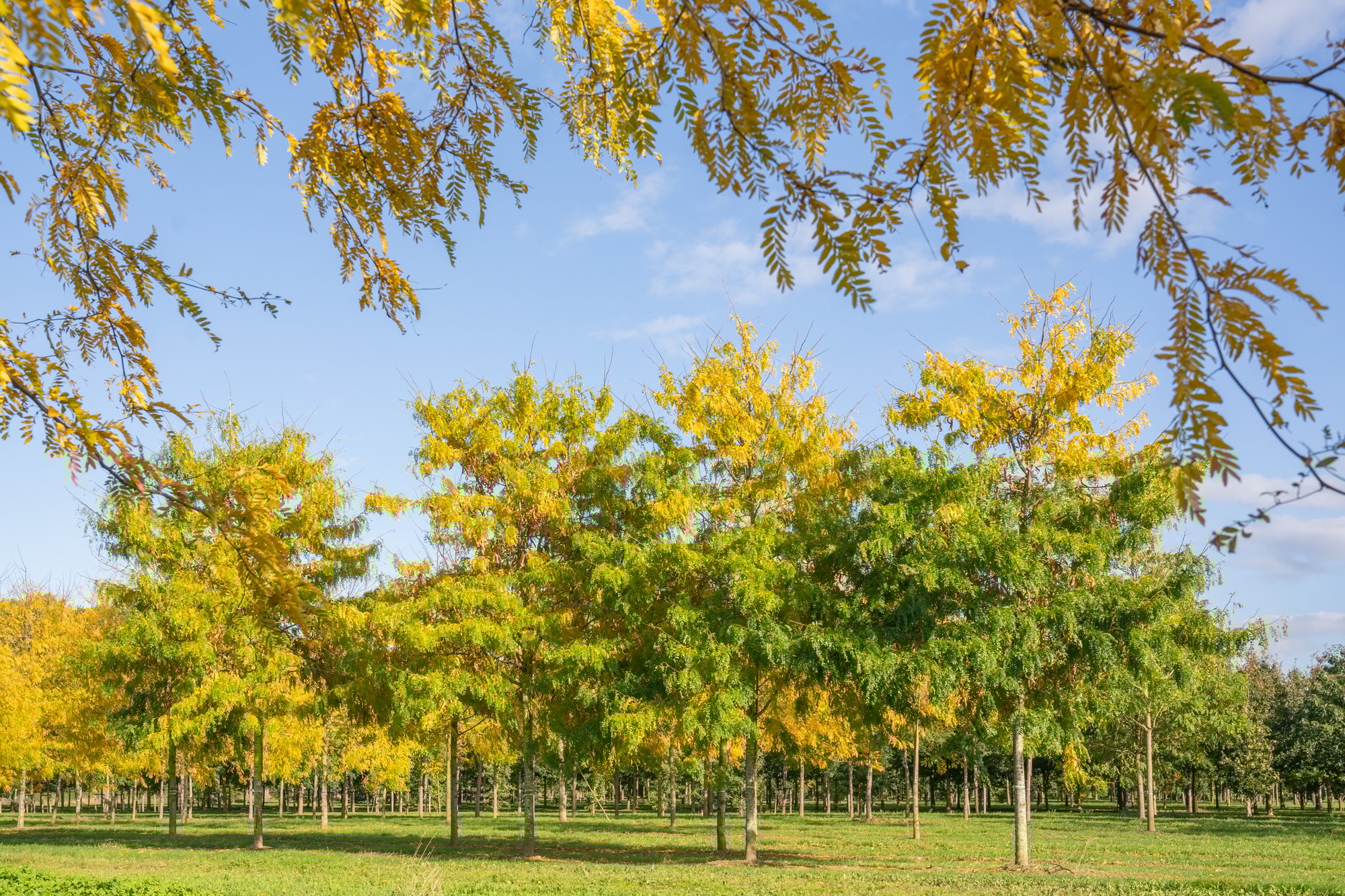
From origin to performance
Ultimately, the key question is not where a tree comes from, but how it performs. In a rapidly warming city, origin is not an end in itself, but a strategy. Those who cling exclusively to historical planting palettes implicitly accept increasing failure rates and declining ecosystem services. Those who instead focus on origin, climate zones, and performance build robust, diverse, and future-proof urban tree structures.
Tree selection should not start with the assortment, but with the site. Analyse soil structure, rootable volume, degree of paving, water management, air quality, salt exposure, and sun exposure.
From site analysis to species selection
Species selection follows site analysis and is based on proven performance under comparable conditions. Digital tools such as TreeEbb can support filtering based on climate tolerance and site factors.
Always involve plant specialists: nurseries, dendrologists, and planting consultants. Designers define spatial and aesthetic conditions, but a future-proof urban tree population requires specialized knowledge. Only then can a robust, diverse, and functional urban tree structure emerge, capable of withstanding the climate challenges of the decades ahead.