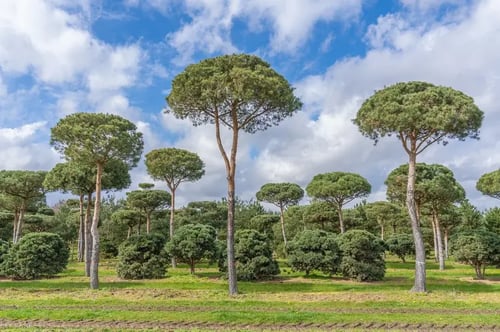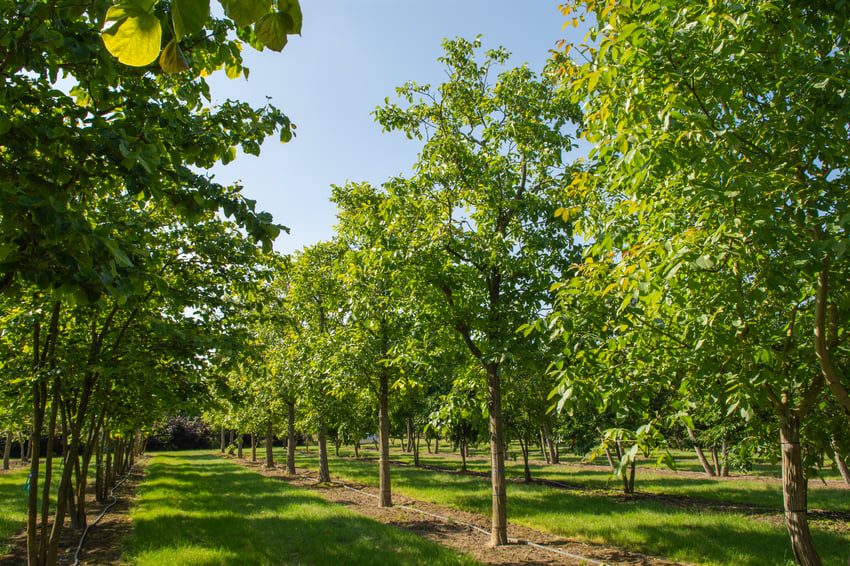
Trees form the foundation of the food forest: they determine the structure, resilience and richness of the ecosystem. Their function goes beyond the obvious food production of fruits, nuts, flowers or leaves. They also play a key role in shading, water management, biodiversity and soil improvement. Unlike in traditional agriculture, trees in a food forest form a permanent, resilient ecosystem in which productivity goes hand in hand with ecology.
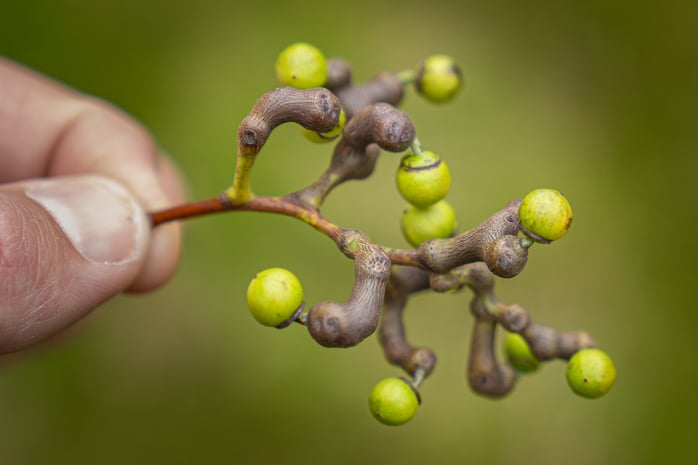
In this blog, we take a closer look at the functions of trees in food forests. We look at fruit-bearing species such as sweet chestnut and mulberry, but also at supporting tree species such as alder and black locust, which fix nitrogen and stimulate soil life. How do you choose the right tree for the right place in a food forest? What is the long-term value of trees in a food forest? Why is planting different tree species so important? And which trees are suitable for our climate when creating a food forest?
Ecosystem development and the role of trees in the food forest
As the name suggests, a food forest is a forest system. To understand the specific functions of trees in a food forest, it is important to know the stages of development of a natural forest: the succession stages. Many food forests nowadays start in a meadow or on a field. This has little to do with the qualities of a forest, which means it takes longer for the planting to take root. Climax trees and shrubs that are overgrown by grass have little chance of success.
Ecological succession from bare soil to forest progresses from annual plants (field crops or weeds) to grasses. Next, areas develop where humus accumulates and perennials establish themselves. This is followed by pioneer trees, which should also be the first step when planting a food forest. These tree species provide wind protection, improve soil structure and create a microclimate in which later species can grow well.
To accelerate this succession, pioneer species such as birch, willow, poplar, black locust and alder are often used. In a food forest, alder and black locust are particularly valuable for their nitrogen-fixing ability, while willows are an important source of nectar in early spring. In addition, planting a few strategic species such as larger trees (large sizes) can help to move more quickly towards a climax stage. This allows climax species such as hornbeam, lime and elm to be added earlier.
From bacterial dominance to fungal dominance
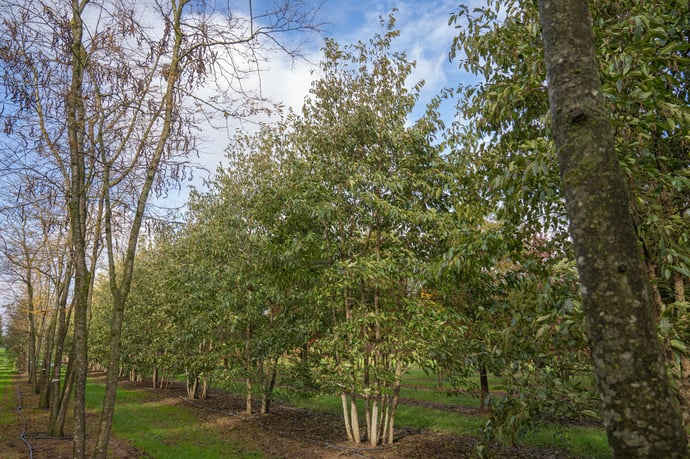
When tree species such as hornbeam, lime and elm are used in larger sizes, they have a direct impact on biodiversity and microclimate. They provide shade from the sun, shelter from the wind and produce rapidly decomposing leaves, which benefits soil formation. This is important for the transformation of bacteria-dominated soil into fungus-dominated soil. Mycorrhizal fungi form underground networks that distribute nutrients and water, reduce stress and make the entire system more resilient.
Fruit trees naturally belong in a later succession phase. Many of these are Rosaceae species such as apple, pear, cherry, plum and medlar, and are mid-succession species. Birds eat the fruit and spread the seeds while resting in pioneer trees. Fruit trees often need richer soils, sufficient nutrients and a stable microclimate to be able to put enough energy into fruit. At the same time, they need light and air to prevent fungal diseases and stimulate good fruit set.
The importance of many different tree species in food forests
Planting as many different tree species as possible ensures healthy diversity and thus a sustainable system. A food forest is designed as a polyculture and arranged in such a way that diseases and pests are less likely to spread (Van Eck, 2024). If a pest does occur, there is sufficient variation to cope with it.
By designing the food forest, natural solutions for diseases and pests can be integrated immediately, for example through combinations of plants that reinforce each other. Food forests also often work with an ecological balance (“glass ceiling”) that allows pests to regulate themselves (Van Eck, 2024). For more information on this, see our previous blog post on food forests. A large number of diverse species also ensures a long-term supply of nectar and fruit, which is beneficial for insects, birds and small mammals and therefore for overall biodiversity. Wouter van Eck's food forest, for example, is located next to a Natura 2000 area. However, the food forest offers a much higher biodiversity value than the area with native trees, because the diversity ensures a longer season of nectar and fruit (Van Eck, 2024).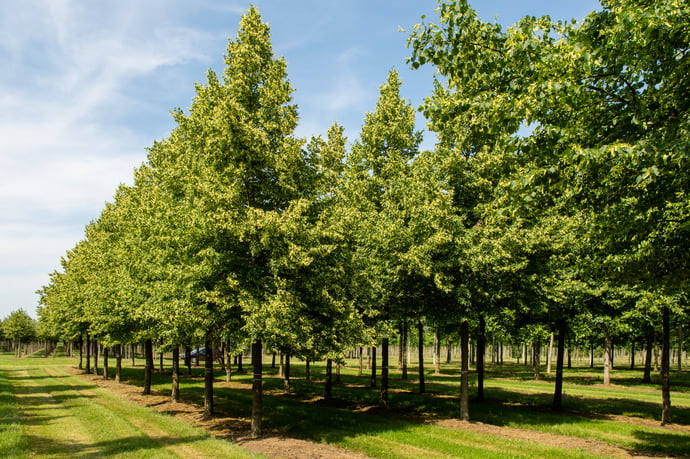
Choosing trees by function: nitrogen, structure and food
When designing a food forest, it is important to choose trees not only on the basis of food production, but above all on their function in the system.
- Nitrogen-fixing trees such as Alnus glutinosa (black alder), Robinia pseudoacacia (false acacia), but also Cercis canadensis (Canadian redbud), Cercis siliquastrum (redbud), Elaeagnus angustifolia (olive willow), Elaeagnus multiflora (long-stemmed olive willow), Elaeagnus umbellata (umbrella olive willow), Gleditsia triacanthos (honey locust) and Hippophae rhamnoides (sea buckthorn) actively enrich the soil. They form a symbiosis with nitrogen-fixing bacteria, making nutrients available to surrounding plants. These species are particularly suitable in the pioneer phase of a food forest and around productive tree species with higher nitrogen requirements. To make it easy, you will also find the filter “nitrogen-fixing” under the “special features” filter in TreeEbb.
- Structure trees provide windbreaks and shade. Examples include Carpinus betulus (hornbeam), Tilia cordata (small-leaved lime) and Populus tremula (aspen). Many nitrogen-fixing trees can also fulfil this function. They determine the microclimate and enable more sensitive species to grow successfully underneath them. Carya species such as Carya illinoinensis, Carya ovata and Carya cordiformis prefer moist soil and benefit from the shelter provided by poplar or alder trees. Hazel (Corylus avellana), for example, grows very well in the shade of Alnus cordata.
- Food-producing trees are the main suppliers of harvest in a mature food forest. Species such as Castanea sativa (sweet chestnut), Juglans regia (walnut), Carya ovata (Shagbark hickory), Cornus mas (yellow dogwood), Mespilus germanica (medlar) and Morus alba (mulberry) provide nuts, fruits or edible leaves. Some species are productive at a young age, others require more patience but deliver great value in the long term or are best planted as large trees to deliver immediately. Many food-producing trees also fulfil one or more supporting functions.
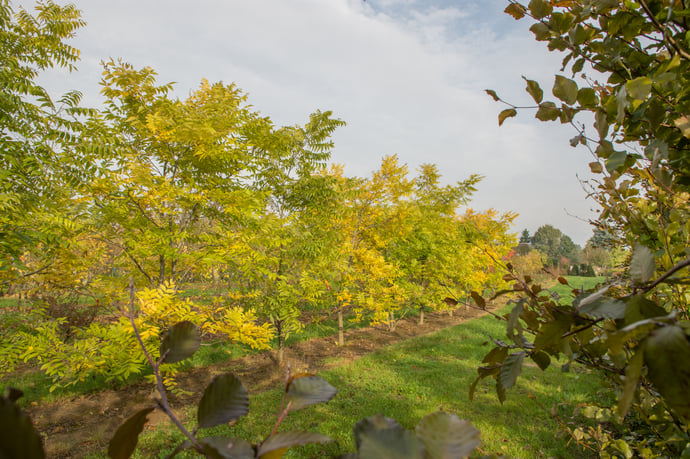
Suitable tree species for food forests in our climate
Location-specific factors play a crucial role in the selection of species for food forests, such as soil type, moisture content, wind load (e.g. sea breeze) and whether the food forest is located in an urban or rural environment. Many successful food forests combine native species with food-producing exotics that have adapted well to our temperate climate.
Although the food forest as an ecosystem has existed for centuries, its application as a form of modern food production is relatively new. That is why many new cultivars are currently being developed and tested. It is often wise to start with reliable basic species such as old apple, pear, plum and cherry varieties, and species such as medlar, quince, fig, sweet chestnut and walnut. Seedlings from walnut trees (Juglans regia) may be less productive, but they offer strong root systems that are more resistant to drought.
Crossbreeding has led to the discovery of improved varieties, such as Juglans ailantifolia × cinerea, Castanea sativa × mollissima and Castanea sativa × crenata. These hybrids combine the yield and disease resistance of Asian or American species with the adapted characteristics of European species. Many cultivars bear Eastern European names and originate from former Soviet countries where large-scale breeding research was conducted for food security purposes. This applies, for example, to yellow dogwood (Cornus mas), olive willow (Elaeagnus) and rowan (Sorbus), but also to originally Asian species such as nashi pear (Pyrus pyrifolia), persimmon (Diospyros kaki) and hawthorn (Crataegus species).
Valuable species in smaller numbers
In addition to the main groups, there are special trees that can add a lot of value to a food forest in small numbers:
- Zanthoxylum simulans (Szechuan pepper): edible, aromatic fruit
- Tilia henryana (Henry's lime): flowers later, thereby extending the nectar season of lime trees
- Hovenia dulcis (Japanese raisin tree): sweet fruit stalks, heat and drought tolerant
- Celtis species (netle tree): edible fruits, strong, disease resistant and leaf litter
- Magnolia species: edible petals, suitable for use in dishes
When selecting mulberries, ensure they are of the correct origin. Black-fruited mulberries are usually hybrids of Morus alba and Morus rubra, not Morus nigra. Morus nigra has limited winter hardiness and requires a warm,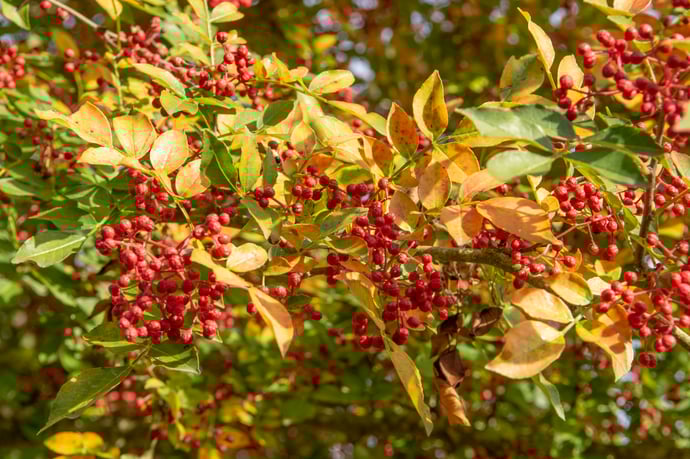 sheltered location.
Ebben Tree Nursery as a total supplier for food forests
Are you designing or expanding a food forest? Ebben Treenursery is happy to help. As a total supplier, we not only supply trees of all types and sizes, but also offer everything you need for a complete planting plan: from shrubs, climbing plants and fruit bushes to ground cover and herbaceous plants. With our large trees, we can directly contribute to windbreaks, shade and faster system development. We can even supply nut trees that bear fruit at a later age, such as Carya, walnut or sweet chestnut, already bearing fruit.
Are you looking for advice on tree species, food forest design or soil suitability? The specialists at Ebben Treenursery are happy to help with suitable planting advice for your food forest. For more information, visit our TreeEbb.
Sources
1. Wouter van Eck (2024). Basic course on food forests. Groesbeek.